

The Zaria massacre has reached its tenth anniversary. At times, I ask myself what went wrong with our society. Those most oppressed by power often become its loudest defenders. They praise their oppressors while turning against fellow victims. One would expect those who have tasted injustice to become its fiercest opponents. Yet history reveals a darker paradox: even genuine victims can be manipulated, derailed, and mobilised against the innocent.
Sociologists describe this phenomenon as internalised oppression, a process through which the oppressed unconsciously absorb the worldview of their oppressors and defend unjust systems as normal or inevitable. Paulo Freire warned that prolonged domination deforms consciousness, while system justification theory explains how people cling to injustice simply because it feels safer than change. In Islamic moral thought, Imam Ali (a.s.) expressed this same truth centuries earlier when he warned that the worst injustice occurs when the oppressed support the oppressor.
History repeats itself not because lessons were never taught, but because they were never truly learned. Hope wavers, doubt creeps in, and the central question remains. How does one draw water from stone? How does one awaken empathy where wounds have hardened into power? Perhaps change begins not merely with the oppressed, but with those brave enough to refuse to become what once sought to break them.
On 12 December 2015, this moral failure reached its most horrific expression in the Zaria massacre. Within forty eight hours, hundreds of unarmed civilians were slaughtered. Among them were my nephews, the twin sons of my blood sister, who were murdered while protecting the oppressed and commemorating the birth of our noble Prophet Muhammad (S). Two others whom she had raised for more than twenty years were also killed. Four lives were erased from our family alone, alongside hundreds more from families equally dignified and equally broken.
They believed in a struggle for a divine system rooted in justice, human dignity, and moral accountability, one capable of making Nigeria and Africa better. Their deaths remind us that oppression is rarely distant. It often emerges from those who sit at our tables, swear loyalty, or pretend to protect us.
A few days ago, someone sent me a clip suggesting that the leader of the Islamic Movement claimed to have forty seven bullets in his skull. This claim was presented either as mockery or as an attempt to discredit Sheikh Zakzaky’s statements as irrational. I understand how such claims may appeal to people who value logical reasoning. However, the clip was doctored, distorted, and taken out of context. The statement, particularly regarding the alleged bullets, was fabricated and manipulated by malicious actors, then amplified by irresponsible media to justify violence that had already been planned against him, as well as the Zaria massacre.
That such distortions were echoed by individuals claiming religious consciousness is disturbing, though not surprising. Al Ghazali warned of scholars and believers who legitimise tyranny under the cloak of piety.
The leader of the Islamic movement spoke about bullet fragments, small particles lodged in his body, including some in the upper layer of his skull. This explanation aligns with medical reports and expert observations. Can anyone genuinely dispute that he was shot at close range multiple times, while his sons and disciples were massacred?
I experienced such while speaking about my nephews at a gathering, opportunists hungry for relevance forced themselves into the narrative, twisting my words and fabricating intentions. A Self styled God fearing hypocrites, motivated by envy rather than truth, reframed my words to their taste for recognition, using digital tools and some platforms in their disposal just to serve their selfish ambitions against someone they do not like. These are people who, when seen praying from afar, appear devout, yet verbally attack the innocent. Indeed evil is not confined to those who wield guns. It thrives in deceit, manipulation, and calculated silence, even within religious circles that are calling for good.
Yet lies decay. Truth endures. Justice, though delayed, remains inevitable.
Blind reverence is another enemy of justice. Those paraded as saints do not possess all answers. As Socrates reminded us, wisdom begins with recognising our ignorance. Angels do not descend to brief humans on reality. When religion becomes a tool for ego, power, and control, it betrays its own purpose. Ayatollah Murtadha Mutahhari emphasised that Islam divorced from justice becomes hollow ritual, while Ayatollah Misbah Yazdi insisted that leadership without moral responsibility is tyranny, regardless of slogans.Killing, when normalised as righteousness, remains killing. It carries irreversible consequences before God, before history, and before the conscience of those who remained silent.
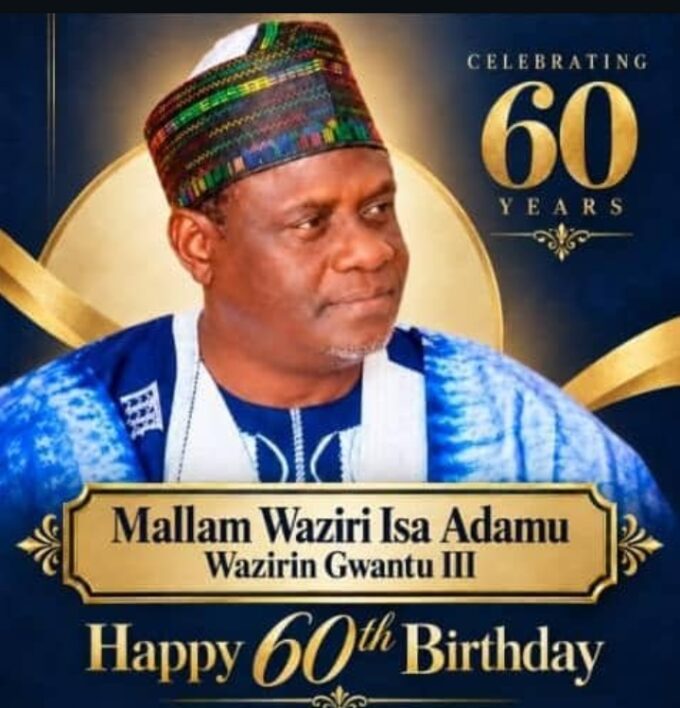
I miss my nephews, Hassan, Husain, Mujahid, and Dahira, the children of the legendary writer Waziri Isa Adam. Though Hassan and Husain often lived with me in my father’s house, nothing diminishes the dignity and care their parents gave them. Their absence forces an unbearable question. Why did the Zaria massacre happen, and how did our society go so wrong?
Massacres occur when power silences conscience and propaganda replaces truth. They are justified only when empathy dies and sectarian loyalty blinds reason. Supporting or rationalising mass killing corrodes society. It normalises violence and teaches future generations that force outweighs justice.
The Zaria massacre stands as a moral failure of leadership, institutions, and security operatives who executed a scripted agenda. History will judge those in authority, including Buhari, Buratai, El Rufai, and all collaborators, both local and foreign, who enabled or defended it. No sentiment, sect, or state interest can sanctify murder. Justice delayed only multiplies grief.
Today’s Nigeria bears the scars of such injustice. Unemployed youths, lives lost to banditry and drugs, and an entire generation branded as disposable are visible everywhere. This decay is not accidental. It is the product of exclusion and the systematic abandonment of human dignity.
Many who once celebrated violence are no longer alive. What did power or praise profit them in the grave? Authority fades. Titles expire. What remains is accountability.
The Islamic movement has not died because movements rooted in justice do not depend on individuals alone. Islam belongs to Allah. Ibn Khaldun warned that societies which abandon justice decay from within, while those grounded in ethical governance endure. Islam was never meant to produce passive believers. It calls for humane societies in which economic justice replaces exploitation, social equity dismantles discrimination, and political accountability restrains tyranny.
True resistance is a principled struggle. It builds minds, restores ethics, and demands systems that serve people rather than crush them. When justice is prioritised, jobs replace bullets, dialogue replaces demonisation, and compassion overcomes sectarian hatred. This is worship in action.
Governments must never adopt killing as policy. No political, sectarian, or strategic agenda justifies the taking of innocent lives. Violence does not secure peace. It fertilises hatred and invites exploitation. Leadership is measured not by the efficiency of force, but by restraint, justice, and the protection of life.
On this solemn tenth anniversary of the Zaria massacre, my family, friends, and I extend heartfelt condolences to all who lost loved ones. May Allah accept the martyrs, envelop them in His mercy, and grant them the highest place in Jannatul Firdaus. May He grant patience, strength, and healing to those left behind.
ahmadeesir214@gmail.com









Leave a comment