

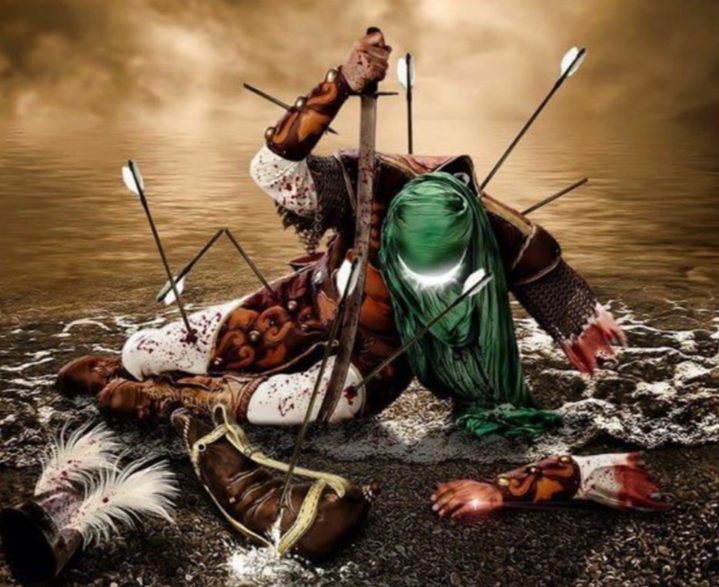
The debate on the above subject was first kick-started by a Columnist on Sunnafiles Website, in an article titled, “When AbdurRahman Ibn Abi Bakr Defended Al-Husayn: Al-Husayn’s Uprising – A Point of Pride for Ahl al-Sunnah”
Below is the full text of the Columnist:
When Abdur Rahman ibn Abi Bakr Defended Al-Husayn: Al-Husayn’s Uprising — A Point of Pride for Ahl al-Sunnah
July 2, 2025
The Muslim Ummah once lived under the shade of the Rightly Guided Caliphate, drawing its governance directly from the pure sources of the Qur’an and Sunnah. The community freely exercised its right to choose its leader without coercion from rulers or chieftains. This right was explicitly clarified by the Caliph Umar ibn al-Khattab (may Allah raise his rank) when he said: “Whoever gives the pledge of allegiance to a man without consulting the Muslims, neither he nor the one he gave allegiance to should be followed, lest they both be killed.” (Sahih al-Bukhari, Book of Stoning the Pregnant Woman for Zina if She Is Married, Vol. 8, p. 168, Hadith 6830).
However, after the end of the Rightly Guided Caliphate, the era of hereditary kingship began. Mu’awiya ibn Abi Sufyan attempted to force the people to pledge allegiance to his son Yazid. He stood before the people of Madinah and declared: “Whoever wants to speak on this matter, let him show his face to us, for we are more deserving of it than him and his father.” Ḥabib ibn Maslama narrated: “I said to Abdullah ibn Umar: Why did you not answer him?” Abdullah replied: “I was about to, and I would have said: More deserving of this matter than you are those who fought you and your father for Islam! But I feared that such words would cause division and bloodshed, and might be misused. So I remembered what Allah has prepared for the patient in Paradise.” (Sahih al-Bukhari, Book of the Battle of the Trench (Al-Ahzab), Vol. 5, p. 110, Hadith 4108).
The Early Opposition to Yazid’s Allegiance
Five senior Companions openly rejected pledging allegiance to Yazid: Al-Husayn ibn Ali, Abdur Rahman ibn Abi Bakr, Abdullah ibn Abbas, Abdullah ibn Umar, and Abdullah ibn Al-Zubayr — all firmly believed this succession contradicted the Prophet’s method of governance.
Among the strongest voices was Abdur Rahman ibn Abi Bakr (may Allah raise his rank). When Marwan ibn Al-Hakam, then governor of Madinah, called the people to pledge allegiance to Yazid before Mu’awiya arrived, he stood before them urging obedience, warning against fitnah, and calling for allegiance. Marwan claimed that appointing Yazid was similar to the wise precedent of Abu Bakr appointing Umar. Abdur Rahman rejected this false comparison, reminding the people that Abu Bakr bypassed his family and tribe and chose a man fit for the task — this could not be compared to a forced hereditary monarchy.
He said: “This pledge is like the pledges of Heraclius and Khosrow — when one emperor dies, another emperor is crowned.” Heated exchanges followed. It was reported that Abdur Rahman addressed Banu Umayyah saying: “O Banu Umayyah! Choose between three options: the Sunnah of the Messenger of Allah (ﷺ), the Sunnah of Abu Bakr, or the Sunnah of Umar! But you seek to make it like Caesar’s rule — when Caesar dies, another Caesar follows.” Marwan ordered his arrest, but Abdur Rahman took refuge in the house of his sister Aisha (may Allah raise her rank). Marwan, out of malice, said: “He is the one about whom Allah revealed: {And he who says to his parents, ‘Uff to you!’} (Al-Ahqaf:17).” But Aisha refuted him from behind the veil, saying: “No verse was revealed about us except that Allah vindicated me.” (Sahih al-Bukhari, Book of Tafsir al-Qur’an, Hadith 4827).
The Courage of Al-Husayn’s Stand
Abdur Rahman passed away before Mu’awiya’s death. Eventually, Abdullah ibn Umar and ibn Abbas pledged allegiance to Yazid when most people did, but Al-Husayn ibn Ali and Abdullah ibn Al-Zubayr stood firm in their opposition. Were it not for Al-Husayn and his companions’ defiance, tyranny would have found a so-called “legitimate precedent” in the Ummah through forced allegiance to Yazid.
Al-Husayn’s journey to Kufa was indeed tactically unwise, but never a Shari’ah violation, as some later scholars under oppressive regimes claimed. The senior Companions and Tabi’un did not forbid Al-Husayn from rejecting Yazid’s rule; they only warned him of the betrayal and treachery that could await him in Kufa — the heartland of the same people who would later abandon him.
Wise Counsel and Warnings
His brother Muhammad ibn al-Hanafiyyah advised him: “Keep your pledge away from Yazid ibn Mu’awiya and the major cities as much as you can. Send your envoys and call people to you. If they pledge allegiance, all praise be to Allah. If they unite behind someone else, it will not harm your religion or honour, for I fear that if you go to any city, factions will rise — some with you, some against — and blood will be spilled.” (Ansab al-Ashraf by Al-Baladhuri 4/15-16).
Ibn Abbas (may Allah raise his rank) also warned him: “If they have removed their governor, defeated their enemy, and secured their lands, then go to them. But if their governor still rules them, then know they only invite you to turmoil and fighting. Do not be deceived by them. Stay here until the people of Iraq clear their enemy, then go. Or go to Yemen — your father had supporters there. Stay apart from the people, send letters, dispatch your envoys — I hope if you do this, you will find what you wish.” (Al-Kamil fi al-Tarikh 2/546).
A Point of Pride for Ahl al-Sunnah
The stand of Al-Husayn had a deep impact on the Ummah’s conscience. Sadly, this legacy has long been overshadowed by the way some Shia commemorate Ashura — despite being among those who betrayed him. This has led many Ahl al-Sunnah to distance themselves from publicly honouring the grandson of the Messenger of Allah ﷺ who rose to reform his grandfather’s Ummah.
In truth, it is we who are more deserving of Al-Husayn than anyone else: “We are more entitled to Al-Husayn than they are.” His jihad — and that of the Prophet’s family who stood with him — and later Ibn Al-Zubayr’s rebellion proved that the Ummah never died as some might claim. It resisted the oppressive dynastic kingship with all its might — yet Allah’s decree was carried out, as none can alter His will.
May Allah raise the rank of the Leader of the Youth of Paradise, the first true revolutionary in Islam — and may He gather us with him under the shade of His Throne.
Below, is the response to the above Opinion:
Karbala Did Not Begin in Karbala
Mahfuz Mundadu
12/01/2026
27/06/1448
I was unaware of the article titled “When Abd al Rahman ibn Abi Bakr Defended Al Husayn, Al Husayn’s Uprising, A Point of Pride for Ahl al Sunnah,” published on July 2, 2025, until my attention was drawn to it.
The article may have already been old in the fast-moving world of online commentary, where yesterday’s argument is quickly buried under today’s noise. But the issue it raises is as fresh as one can think of. Karbala does not expire. The question of Imam Husayn does not grow stale.
Every generation that claims Islam must return to it, because Karbala is not merely an event in history. It is a mirror placed before the conscience of the Ummah. Hence, my acceptance to respond.
The article gets one important thing right. Imam Husayn ibn Ali, peace be upon him, did not rise for chaos, tribe, vanity, or appetite for power. He stood against forced allegiance to Yazid, and by that stand, he exposed the ugly moment when leadership in the Muslim community was dragged from Prophetic responsibility into self-indulgence.
The article also does well to remember Abd al Rahman ibn Abi Bakr, who saw through the Umayyad attempt to package corrupt leadership as religion. Yet after seeing this much, the article stops where the real work should begin. It condemns the fruit, then quietly walks past the root as if the tree grew without soil.
Here the matter needs both a devotional heart and a rational mind. The devotional heart weeps for Imam Husayn because it knows that the grandson of the Prophet was not an ordinary victim. It feels the thirst of Karbala, the loneliness of the tents, the grief of Zaynab, and the wound carried by the house of Fatimah.
The rational mind then asks a harder question. How did the Ummah arrive at a point where the blood of the Prophet’s grandson could be made so cheaply available to the sword of a tyrant who claimed Islam? Devotion without reason becomes sentimental smoke. Reason without devotion becomes a cold knife. Karbala demands both tears and analysis.
Reading the article took me back to my student days, and I am still a student jumping from one programme to the other. I recall especially those hard encounters with engineering mathematics.
We did not pass mathematics by emotion, slogans, or inherited comfort. A lecturer would not allow you to jump from question to answer because your people liked the conclusion or your seniors respected the formula. You had to show the working, line by line, assumption by assumption, theorem by theorem.
You had to test the limit, find the derivative, integrate the scattered parts, decompose the signal, transform the equation, eliminate false variables, and know whether you were dealing with a scalar field or a vector field.
Looking back now, I wish religious scholarship in our contemporary Nigerian landscape would enjoy even a fraction of that discipline. That hunger for facts, that refusal to allow fiction and folklore to walk freely in the name of sacred history.
In calculus, a limit teaches patience before judgement. You do not jump into a point with arrogance. You approach it from the left, from the right, from above, from below, and you ask whether the value remains stable when the distance becomes infinitesimally small.
If we apply that discipline to Karbala, we cannot begin with Yazid alone. We must approach the tragedy from the Prophet’s final illness, from the calamity of Thursday, from Saqifah, from the perspective of Imam Ali and Sayyida Fatimah, from the Qur’anic rank of the Prophet’s household, and from the slow movement of power away from guidance.
The limit of this historical function, as it approaches Karbala, does not point to a sudden accident. It points to accumulated deviation.
The first wound was the calamity of Thursday, Raziyyatu Yawm al Khamis. Sahih al Bukhari preserves the report that, during the final illness of the Messenger of Allah, he asked for writing materials so that he could write something after which the Ummah would not go astray.
The report appears in Sahih al Bukhari, Hadith 114, and in other narrations within the same collection. The Prophet did not ask for a paper to settle a domestic quarrel. He tied that writing to protection from misguidance, which means the matter belonged to the future safety of the Muslim community. Yet dispute entered the room, voices rose before the Prophet, and the writing did not take place.
Ibn Abbas later wept over that day and called it a calamity because something came between the Messenger of Allah and what he wanted to write for the Ummah. Those tears were not emotional decoration. They were the tears of a man who understood that history had turned at a dangerous point.
A devotional reading feels the pain of those tears. A rational reading asks what they mean. If the Prophet wanted to write something that would prevent misguidance, and if that writing was prevented by those around him, then no serious scholar has the right to treat the matter as a harmless incident. Something happened there. Something with a long shadow.
The Qur’an had already made the principle plain. “O you who believe, obey Allah and obey the Messenger and those vested with authority among you” (Qur’an, Surah al Nisa, 4:59). It also says, “Whatever the Messenger gives you, take it, and whatever he forbids you, abstain from it” (Qur’an, Surah al Hashr, 59:7).
The Prophet was not a mere carrier of a book whose authority ended once revelation had been delivered. He was the teacher of the Book, the interpreter of revelation, the judge among believers, and the one whose absolute obedience Allah made obligatory.
To invoke the Book of Allah while blocking the Prophet’s final clarification was not loyalty to the Book. It was the beginning of a dangerous separation between scripture and the living authority sent to explain it.
This point must be faced without panic. The issue is not whether the Qur’an is complete. Indeed the Qur’an is complete. The issue is whether anyone had the right to stop the Messenger of Allah from writing what he himself said would protect the Ummah from misguidance.
When the Prophet says, bring me writing materials, the devotional heart says, may my father and mother be sacrificed for you, O Messenger of Allah, here is the writing material. The rational mind says, if such a request was blocked, then a major historical variable has entered the equation. Both arrive at the same conclusion. The incident cannot be brushed aside.
In derivatives, we study the rate of change. A small movement at one point may appear harmless, but when its slope is studied properly, it reveals the direction of the entire system.
The calamity of Thursday was one such derivative in the history of the Ummah. It showed a change in obedience at the most delicate hour of Islam. A Prophet asks to write, people disputed, the writing was lost, and later generations are asked to behave as if nothing serious happened.
A careful student of history must ask what changed at that moment and in what direction the Ummah began to move after it.
Then came Saqifah. While the Prophet’s body had not yet been buried, political discussions had already begun under the shelter of Banu Sa’idah. The Ansar feared exclusion, the Muhajirun feared fragmentation, jahiliyya inspired tribal memory stirred, Qurayshi calculation moved quickly, and the language of unity entered the room like a respectable visitor carrying a concealed weapon.
Later, Umar ibn Khattab described the pledge to Abu Bakr as a sudden affair, a faltah, a baradgada, typical of hayagaga…budar kai gidan kura, and warned that whoever repeated such a method should not be followed. This report is preserved in Sahih al Bukhari, Hadith 6830.
If the method was so risky that one of its central actors warned against its repetition, then no honest reader should sell it as a flawless model of consultation.
Here the devotional and rational angles again meet. Devotion asks why the body of the Prophet was not enough to hold the community in reverent pause. It asks why the burial of the Messenger of Allah did not command the full presence of those who were already discussing power.
Reason asks another question. If consultation is the principle by which forced allegiance to Yazid is condemned, then where was full consultation at Saqifah? Where was Ali ibn Abi Talib in that decisive gathering? Where was Fatimah al Zahra, the daughter of the Messenger of Allah? Where were Banu Hashim, who were occupied with the burial of the Prophet?
A consultation that excludes the house of revelation at the first hour after the Prophet’s departure may be defended as political necessity, but it cannot be dressed as complete moral consultation without insulting the intelligence of the reader.
Gaussian elimination taught us that when a system has too many unknowns, one must remove confusion row by row until the truth begins to stand exposed. You do not solve equations by admiring the handwriting. You isolate the variables.
You ask what is known, what is assumed, what is smuggled into the solution, and what contradiction appears when the rows are reduced. Apply that method to the early question of Khilafah and the hidden variables become clear.
One row says the Prophet asked for writing materials and was denied and disobeyed. Another row says the first pledge was sudden. Another row says the household of revelation was not central to that meeting. Reduce the system honestly, and the unknown begins to look less unknown.
The Qur’an did not treat the Prophet’s household as an emotional footnote. It says, “Allah only desires to remove impurity from you, O People of the House, and to purify you completely” (Qur’an, Surah al Ahzab, 33:33).
It says, “Say, I ask of you no reward for it except love for my near relatives” (Qur’an, Surah al Shura, 42:23). In the verse of Mubahala, Allah commanded the Prophet to bring his sons, his women, and himself in a confrontation of truth before God (Qur’an, Surah Aal Imran, 3:61).
When that event came, the Prophet brought Ali, Fatimah, Hasan, and Husayn, as recorded in Sahih Muslim. This was not a family photograph. It was a public placement of the Prophet’s household at the heart of truth.
Once these verses are read together, the matter becomes too large for any polite evasion. How did the household that carried such Qur’anic weight become politically marginal at the first transfer of authority after the Prophet?
How did those brought forward at Mubahala become those left outside the decisive room? How did love for the near relatives become safe praise in sermons, but not a binding principle in authority?
Love without loyalty is only a hollow claim. Praise without protection is a theatre. A community does not honour the Prophet’s family by decorating their names after stripping their role of consequence.
This is where the devotional spirit must guard itself against laziness. Devotion is not the same as noise. It is not enough to say, we love the Ahl al Bayt, then close the file when their political displacement is mentioned.
It is not enough to recite praises of Fatimah while refusing to face her grief. It is not enough to call Imam Husayn the leader of the youth of Paradise, then reduce his refusal of Yazid to an unfortunate political misjudgement. True devotion is not blind affection. It is loyalty disciplined by truth.
The rationalist angle too must guard itself against arrogance. Reason is not the same as dryness. It is not scholarship to dissect Karbala until its tears disappear. It is not intellectual maturity to speak of Imam Husayn as though he were merely a political actor moving pieces on a board.
There are moments where reason must remove its shoes, because it is standing on a sacred ground. The blood of al Husayn is not a laboratory specimen. It is a proof, a witness, a cry from the heart of Prophetic history.
The task is not to choose between devotion and reason. The task is to let devotion protect the heart from cruelty and let reason protect the mind from folklore.
Integration teaches another lesson. It gathers small parts and shows the total area under the curve. One isolated event may look manageable, even excusable, when viewed alone. But when the pieces are integrated across a timeline, a pattern begins to appear.
The blocked writing on Thursday, the hurried settlement at Saqifah, the sidelining of Imam Ali, the grief of Fatimah, the rise of political convenience, the language of unity used to quiet discomfort, the later Umayyad seizure of religious vocabulary, the demand for allegiance to Yazid, and the refusal of Imam Husayn all belong to one curve.
Karbala is the area under that curve, measured in thirst, blood, captivity, and a shame that history has not been able to wash away.
This is why the article’s attempt to claim al Husayn while avoiding the road to his martyrdom is not enough. It wants al Husayn as a banner against Yazid, but not as a question against the earlier unfolding events that made Yazid possible.
It wants Karbala as tragedy, not as evidence. It wants the martyrdom without the indictment. It wants to curse the final tyrant while speaking softly of the first cracks in the wall. That may make a comfortable reading, but it is not scholarship. It is a shortened edition of history prepared for public calm.
Fourier series teaches that a noisy signal can be broken into its hidden frequencies. What sounds like one loud noise may contain many tones. Karbala also carries several frequencies beneath its apparent sound.
There is the frequency of political coercion. There is the frequency of interrupted guidance. There is the frequency of jahiliyya inspired tribal memory returning under religious vocabulary. There is the frequency of love for the Prophet’s household without obedience to their moral authority.
A shallow listener hears only, Yazid was bad. A trained ear hears the deeper vibrations and knows that the tragedy carried the unresolved symphony of that fateful Thursday and Saqifah.
Laplace transform carries a problem from one domain into another so that what looked stubborn in one form becomes clearer in another. Karbala must be transformed from the domain of mere event into the domain of structure.
In the time domain, it is the journey of Husayn to Kufa, the betrayal, the blockade, the thirst, the killing, and the captivity. In the structural domain, it is the consequence of separating power from Prophetic guidance.
Once the problem is transformed, the solution looks different. One no longer asks only who swung the sword. One asks what political theology gave the sword such a horrible ability.
The article praises Abd al Rahman ibn Abi Bakr for opposing Yazid, and rightly so. His rejection of unAllah and antiAllah rule exposed the Umayyad attempt to imitate Caesar and Khosrow. Yet this objection, noble as it was, only touched the branch. The root was older.
Once authority could be arranged without the central participation of Imam Ali and Fatimah, once the house of the Prophet could be praised in language and bypassed in decision, the road toward corrupt leadership of the Muslim Umma had already been cleared.
Yazid did not invent the separation. He inherited it, made it shameless, and forced the Ummah to smell what had been rotting for years.
Vector and scalar fields also have something to teach us here. A scalar field gives magnitude at every point, but a vector field gives both magnitude and direction.
Much of our religious discourse in Nigeria is obsessed with scalar claims. This person is great, that generation is noble, this name is sacred, that event must not be questioned. But greatness without direction is misleading.
The real question is not only the magnitude of claimed piety, but the direction in which power moved. Was it moving toward the Prophet’s household or away from them? Was it moving toward justice or toward convenience? Was it moving toward guidance or toward the divine misalignment?
This is one of the burdens of religious scholarship in our own environment today. We often have more heat than method, more inherited confidence than tested evidence, more folklore than disciplined inquiry.
A preacher can build a whole sermon on a weak tale, a public speaker can inherit a slogan and call it creed, a crowd can shout down a question before it has even understood it.
In engineering mathematics, such laziness would fail before the chalk even touched the board. You cannot hide a wrong derivative behind a loud voice. You cannot solve a system of equations by praising your ancestors. You cannot integrate a function by emotion.
Why then should sacred history be handled with less care than calculus?
The devotional angle says the heart must not become numb before the suffering of the Prophet’s house. The rational angle says the mind must not be bullied into accepting contradictions. Together, they demand a higher scholarship.
A scholarship that can mourn without losing discipline. A scholarship that can analyse without losing reverence. A scholarship that can read Sahih al Bukhari without fear, read the Qur’an without selectivity, and read history without needing every inherited hero to remain untouched by scrutiny.
That is the scholarship we need, especially in Nigeria, where religious debate too often becomes a contest of volume rather than verification.
The article says Imam Husayn’s journey to Kufa was tactically unwise. That sentence sounds clever only if survival is mistaken for wisdom. If tactics were the highest measure of truth, many prophets would look like poor planners.
Nuh preached to mockers, Ibrahim faced the fire, Musa walked into Pharaoh’s court, and the Prophet of Islam endured hunger, boycott, exile, siege and war. Truth does not always move like a merchant protecting his capital.
Sometimes truth walks into danger because only danger can expose the lie sitting on the throne.
Imam Husayn knew what Yazid represented. He knew that allegiance to such a ruler would not be a small political compromise. Yazid did not merely want silence from him, since silence would still leave Imam Husayn as a living question before the Ummah.
Yazid wanted his pledge because the pledge of the Prophet’s grandson would turn corruption into legitimacy. It would allow the palace to say, even Husayn has accepted. That was the trap al Husayn refused to step on.
A pledged Imam Husayn would have been more useful to tyranny than a martyred Husayn. This is the political secret of Karbala. The blood of al Husayn carried the fragrance of the Prophet’s house.
If that blood had endorsed Yazid, tyrants would have entered the sanctuary wearing the perfume of Prophetic approval. Al Husayn would not lend his name to that crime. He would not turn the house of Fatimah into a stamp for gangsters.
So he stood, and by standing, he made falsehood “win” yet, in a way that exposed it forever.
Those who say that the mourners of Imam Husayn betrayed him are trading in a cheap argument. Some people in Kufa betrayed him. That much is true. Some wrote letters and fled when the price of their invitation arrived.
Some were bought, some were frightened, some were trapped, some were imprisoned, some died with him, and some later rose in remorse. Kufa was not one clean block of theology. It was a tense political city under surveillance, bribery, threat, and fear.
To flatten all of that into a slogan is not scholarship. It is propaganda with an old cloak around its shoulders.
The army that faced Imam Husayn was not a loose crowd of confused villagers who happened to wander into the desert. It moved through official power. Governors acted, commanders marched, roads were watched, threats were issued, people were paid, families were frightened, and prisons were used.
The chain of responsibility ran upward. The blade may have been held by soldiers, but permission came from Yazid. Anyone who blames only the frightened crowd while speaking gently of the throne has missed the structure of the crime.
This is where the derivative of hypocrisy becomes visible. The same people who praise consultation against Yazid become quite when Saqifah is questioned. The same people who honour the Prophet’s household in poetry become nervous when their political authority is mentioned.
The same people who mourn al Husayn as a victim become uncomfortable when al Husayn appears as an reason. The slope of that contradiction is steep. It moves away from truth and toward comfort.
If our religious scholarship had the discipline of calculus, it would not allow such a curve to pass unexamined.
The real betrayal of al Husayn is not weeping for him. The real betrayal is praising him while protecting the logic that killed him. The real betrayal is calling him the leader of the youth of Paradise, then reducing his refusal of Yazid to a political miscalculation.
The real betrayal is condemning tyranny only when it becomes too ugly to defend, while refusing to study the earlier decisions by which sacred authority was separated from the Prophet’s household.
The real betrayal is turning Ashura into safe sadness, a day of tears without sweat, grief without courage, memory without judgement.
Karbala was Thursday’s calamity written in thirst. It was Saqifah under a burning sun. It was the marginalisation of Imam Ali returning as the isolation of Husayn. It was Fatimah’s pain echoing in Zaynab’s captivity.
It was the Ummah being forced to see what happens when the Prophet’s house is loved in speeches but abandoned in power. The road from Madinah to Karbala was not paved in one afternoon.
It was paved each time clarity was postponed for convenience, each time authority outran guidance, each time the wounded were told to be patient while power was told to proceed.
The Qur’an does not allow history to become an idol. It says, “O you who believe, stand firmly for justice as witnesses for Allah, even against yourselves, your parents, and your relatives” (Qur’an, Surah al Nisa, 4:135).
It says, “Do not let hatred of a people make you swerve from justice. Be just, that is nearer to piety” (Qur’an, Surah al Maidah, 5:8). It warns against blind inheritance when people insist on following what they found their fathers upon, even when their fathers understood nothing and were not guided (Qur’an, Surah al Baqarah, 2:170).
These verses are not decorations for mosque walls. They are instruments of moral Gaussian elimination, removing false reverence until truth stands alone.
The painful truth is that many people want a Husayn who makes no demands. They want a noble martyr, not a living judge. They want to cry for him without letting his blood question their reading of history.
They want Husayn without that fateful Thursday. They want Husayn without Saqifah. They want Husayn without Imam Ali’s displacement, without Fatimah’s grief, without the slow movement from guidance to misguidance, and from rule to despotism.
That kind of Husayn is easy to love because he cannot worry anyone. But such Husayn cannot be the Husayn of Karbala.
The Husayn of Karbala is not risk-free. He walks into every age and asks why patience is always demanded from the wounded and rarely from the powerful. He asks why the victim must be patient while the ruler is explained.
He asks why people see Yazid clearly but become nervous when the earlier road to Yazid is mentioned. He asks why the Prophet’s household is praised with wet eyes and abandoned with dry hearts. He asks why men remember his thirst and still drink comfortably from the cup of political convenience.
No one owns Imam Husayn by slogan. Not the one who shouts his name, not the one who writes essays about him, not the one who cries for him, and not the one who claims him through inherited identity.
Imam Husayn belongs to the Prophet who said he was from him. He belongs to the Qur’an that commands justice. He belongs to every conscience that refuses to sell religion to power.
Yet no one has the right to claim him while refusing the questions he raises. An admirer who fears the implications of Husayn’s stand is only standing at a safe distance.
This is where I return to my old scholarly days with a kind of ache. Mathematics did not care about our comfort. It forced us to prove, test, derive, integrate, transform, and solve.
It punished shortcuts, exposed false assumptions, and made a fool of anyone who tried to bluff his way through a theorem. If only our religious scholarship, especially in the noisy Nigerian landscape of today, would accept even a fraction of that discipline.
We would have fewer inherited fictions parading as sacred truth. We would have fewer loud claims and more honest questions. We would have fewer slogans and more scholarship worthy of the God in whose name we speak.
The article under review tries to rescue Imam Husayn from neglect. That effort would have been noble if it had gone far enough. Husayn does not need rescue from those who remember him with grief.
He needs rescue from those who praise him selectively. He needs rescue from those who condemn the sword at Karbala but refuse to discuss the politics that sharpened it.
He needs rescue from those who denounce forced allegiance under Yazid but become strangely timid when the absence of the Prophet’s household at Saqifah is mentioned. He needs rescue from clean histories written by nervous hands.
Karbala did not create the crisis. It revealed it. It gathered the unresolved questions of Thursday, Saqifah, authority, obedience, justice, and the Prophet’s household, then placed them before the Ummah in the language of blood and captivity.
That is why Husayn remains an enigma. He does not allow cheap mourning. He does not allow selective praise. He does not allow anyone to curse Yazid while preserving the habits that made Yazid possible.
His question still stands in the road, sharp and patient. When the house of the Prophet stands on one side and political convenience stands on the other, where do we stand?
May Allah bless Muhammad and the family of Muhammad. May He grant this Ummah the courage to read its history without fear, inherited blindness, or the vanity of inherited slogans.
May He protect us from praising martyrs while living by the manners of those who abandoned them. May He make love of the Prophet’s family more than ceremonial affection.
May He make it a discipline of truth, justice, loyalty, and obedience to Allah and His Messenger.











Leave a comment